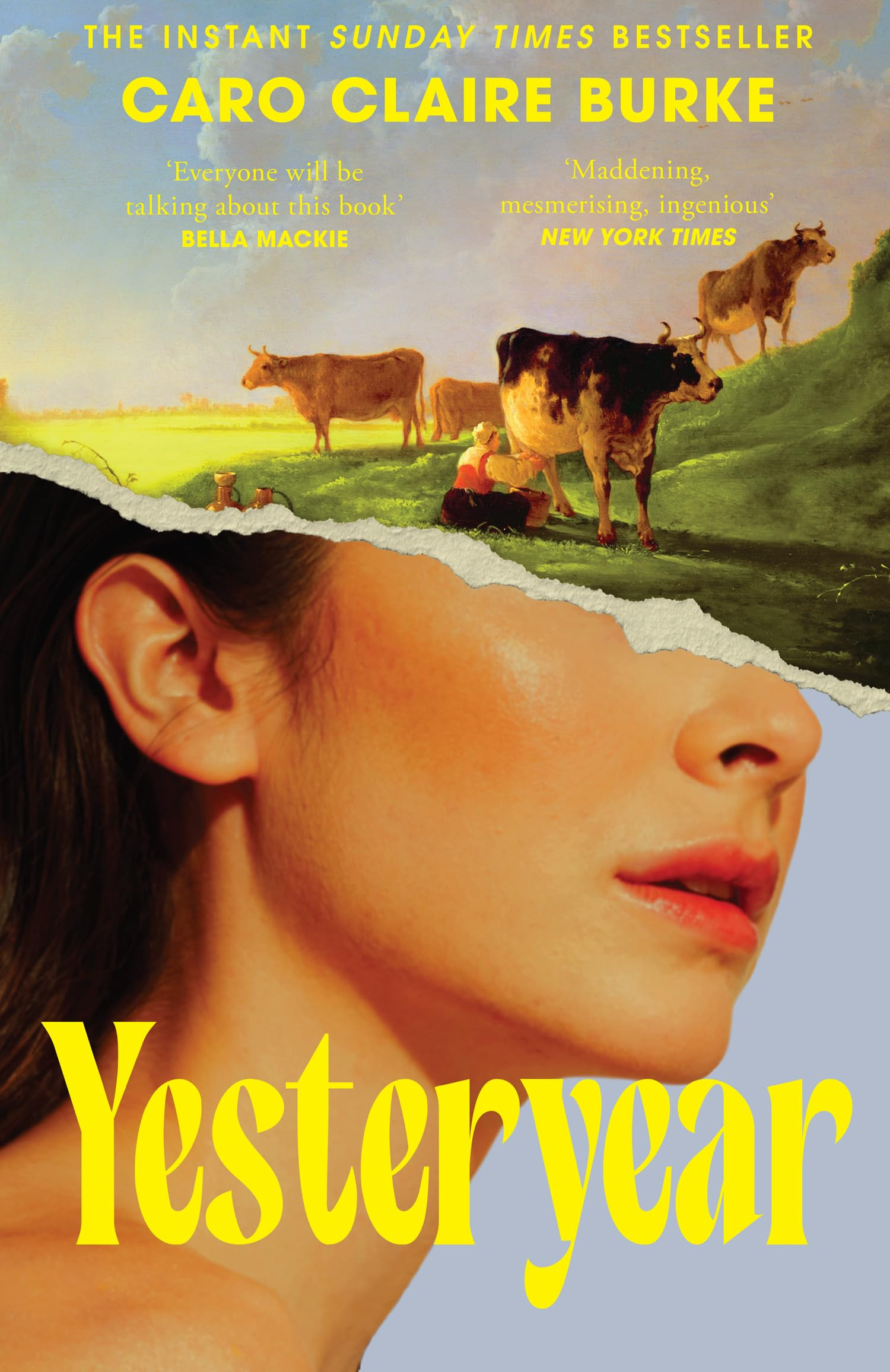
Written by Mimi Cotton
Since Yesteryear by Caro Claire Burke hit the shelves of bookshops earlier this year, the excitement and conversation surrounding the ‘tradwife’ thriller has been snowballing. It has generated so much discourse that it has already landed a movie deal with Anne Hathaway producing and potentially starring. So what is it about this book that has captured the attention, fascination and anxiety of so many readers?
Caro Claire Burke’s novel follows Natalie Heller Mills, an Instagram influencer with millions of followers, who presents and promotes a good, Christian and ‘traditional’ lifestyle; homesteading, having lots of children, obeying your husband and God. However, one morning Natalie wakes up in a world that seems just like her own perfect all American farm. But there is a twist: it is somehow in the pioneer era. Exploring themes of online personas, expectations of women, online ‘pipelines’ and how women exist in the modern world, the book examines how we, as a modern society, ended up in a place where history’s oppression of women somehow became glorified on our timelines.
Burke’s debut novel captures the internet zeitgeist of ‘tradwives’ and online personas, drawing obvious parallels with real life content creators. Influencers such as Nara Smith serve as clear inspiration. Smith creates cooking content, always from scratch, in perfect clothing, with a soft spoken voice and videos that are somewhat devoid of the chaos expected in the home of a young family like hers. Smith’s content is often created with a pinch of self-awareness, with humour and irony injected into it. Smith is open about how shared parenting responsibilities with her husband allow her to schedule her content, though this hasn’t left her without criticism, with audiences questioning if she creates unrealistic expectations for young mothers. Smith doesn’t necessarily fit the mould of a ‘tradwife’ influencer. She isn’t promoting a lifestyle that is dependent on her husband; both her and her partner have found success independently as well as together. However, Smith has collaborated with another influencer that more directly promotes this ‘traditional’ form of living, and who obviously influenced much of Yesteryear.
Hannah Neeleman runs her social media accounts under the name Ballerina Farm and her at-home interview garnered equal swathes of criticism and sympathy. A scroll through her Instagram and TikTok pages shows an all American family, living on a farm in Utah and sharing their idyllic lives with the world. Much like Nara Smith, the Ballerina Farm accounts also feature cooking videos with a similar air of perfection, only Neeleman’s children run on and off the camera. There is the background noise of busy family life, as can be expected with Neeleman having nine children. The image she portrays on her social media is polished and curated. There is just the right amount of realism – the interrupting children or small messes – that sets her family and farm apart from other online accounts. The success of Ballerina Farm, totalling around ten million followers, also includes the commercialisation of produce from meat to protein powder, homeware and, of course, raw milk. On the face of it, the page seems idyllic, traditional and obviously profitable.
However, in 2024 a Times interview with Neeleman reveals something quite different to the romanticised ‘tradwife’ content that was being produced. Journalist Megan Agnew planned to interview Hannah directly but her husband and business partner, Daniel Neeleman, became very involved throughout the interviewing process. In fact, Agnew noted how he was central in the business that Hannah acts as a face for. However, his involvement didn’t prevent some observations about the farm’s reality from coming to light. Some key revelations included how Mrs Neeleman had actually wanted to be a ballerina, hence the farm’s name. It was uncovered that she had put this dream aside to get married after just two months of dating (despite wanting to wait), have children, as well as move from New York to Utah. She planned to use a barn at their property as a dance studio but it was instead converted into a schoolroom where she could homeschool her children, that she appears to be the main carer for. Neeleman later described the Times article as an “attack” on her family and marriage. A Vanity Fair article later referenced how Hannah could become ill from exhaustion, suggesting she bears much of the responsibility of running the household whilst also maintaining the social image that the farm appears to rely upon.
The article painted a very different picture to the perfect ‘traditional’ life that Neeleman portrayed on social media. This disparity is almost perfectly reflected in Yesteryear with the main character, setting and family dynamics seeming to have been hugely inspired by Ballerina Farm. The aforementioned Times article garnered huge amounts of attention, resulting in both criticism and sympathy. Some saw it as a warning sign, showing that not everything is as it seems and that the ‘tradwife’ lifestyle can come with sacrifice as well as, to some degree, danger. Yesteryear serves a very similar purpose in exposing what exists beyond the curtain of social media. This is particularly true of another ‘influencer’ that seems to have influenced Burke’s writing.
Ruby Franke created a YouTube account titled ‘8 Passengers’ to which she shared her experiences of being a mother in a large Mormon family in Utah. At first, the content was seen as relatable and somewhat idealised. However, over time audiences began to notice harsh rules, severe punishments and examples of neglect being enacted on the children. In 2023, Franke was arrested for child abuse. Once again, the off screen reality horrified audiences. It illustrated how exploitative and dangerous ‘family’ content being shared online can be to children, as well the pipeline from ‘tradwife’ content to the extreme and unethical treatment it can lead to.
Yesteryear has been received with positive reviews, some readers being thrilled purely by the contemporary premise. By exploring themes that readers are currently experiencing anxieties about, Burke has found huge success. However, despite the rave reviews, some of the influencers ‘portrayed’ in the book have criticised it. When Hannah Neeleman was asked by Vulture about potentially being an inspiration for Yesteryear, she simply replied: “I know what’s going on”.
The book presents a mirror to society, spotlighting a polarising identity that has been crafted online and served up as inspiration. Burke’s novel breaks the illusion, showing the ugly reality. The book acts as a forewarning about the road that ‘tradwife’ content and the lifestyle it promotes can give rise to. An influencer can be making home cooking content and soon enough conspiracy theories, harmful behaviour and oppressive dynamics can begin to cloud the algorithm.
As with any book that explores contemporary issues, it is interesting to see how such literature is looked back on in years to come. Will the premise seem laughable, the protagonist implausible or will we look back in horror at the red flags laid out for us?


Leave a Reply