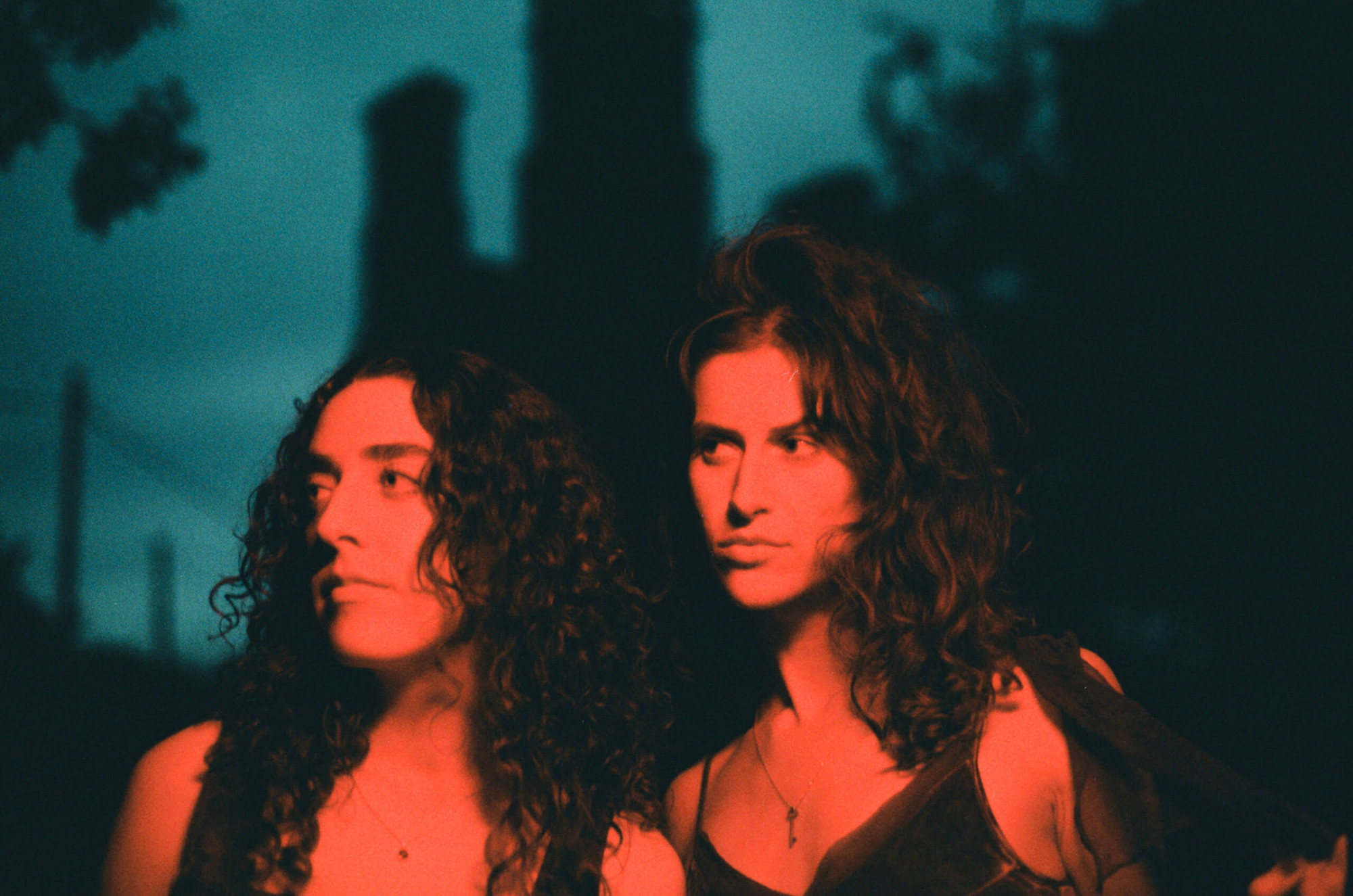
Indie rock duo Tommy Lefroy spoke to Karma! about their new EP, ‘born blue’, the creative process behind their music, and songwriting inspirations from artists like Joni Mitchell to writers like Anne Carson and even mythology. Tessa and Wynter, who make up Tommy Lefroy, also told us about their experiences as women in the music industry, and what is in store for them over the coming months.
Joining the call from London, Tessa and Wynter mention they’re in the midst of packing for a big move as Wynter talks about how the duo came to be formed: “It was kind of a secret passion project of ours. For a while, we were songwriters, writing mostly for other people’s records, and it wasn’t until when lockdown happened in 2020 that we started really spending some time on this project. So in some ways, it was kind of a product of that.”

Since then, the duo have released a slew of singles and EPs. Their third EP, titled ‘born blue’, was released on the 25th of October. Wynter mentions that the first song written for the project, ‘You Exist’, contains the title of the EP in the lyrics, but they had been considering it as a title beforehand. “I think we resonated with it because we just, we both tend towards being blue and having, you know, kind of sad dispositions,” Wynter says. She continues, saying this is something which their fans seem to relate to as well, which illustrates the strong bond that they have created with their listeners. Tessa notes that the cover art was shot “before the project had really come to fruition”, and “stood as a metaphor in a lot of ways, for like feeling underwater and that kind of blueness, and also, in part about pulling yourself onto the other side”.
When writing, Tessa says that their creative process “takes many different forms.” She elaborates, “sometimes one of us will come with more of a fully realised concept, or a chorus, or half a song, or most of a song that we then deconstruct and take apart and put back together.” Wynter adds to this, saying, “we’re generally writing all the time, journaling, writing poetry, writing individually, and so now when we come together to write, it’s a little bit more intentional, and we usually are more limited just in the time that we have to sit down and write… we’re just always taking note of places and things we read and keeping a little arsenal of things that we can turn to when it’s time to write the music”.
It is evident that both Tessa and Wynter take inspiration from a range of mediums, but music is still a huge influence on them. Tessa mentions that they were both raised on Heartland rock, and that “storytelling was always kind of at the forefront of a lot of the early music that we listened to.” They both mention acts such as Joni Mitchell, The Chicks, Alanis Morisette, Bruce Springsteen, Tom Petty, Fleetwood Mac and James Taylor as having an impact on their work. Speaking about modern influences, they list Big Thief, Alex G, Boy Genius, Caroline Polacheck and Ethel Cain as acts which inspire them. Wynter draws attention to alternative rock/indie folk band The National, saying, “I love the arrangements and how polyrhythmic and intricate everything is.” Tessa agrees, and says that “music right now is so cool and people are really taking a lot of risks and just doing what feels true to them”. She also mentions Samia, who the duo toured with last year, as another inspiration.
However, as mentioned previously, their inspirations are not just musical. Tessa says that literature is “very influential in a lot of ways… we’ve turned to literature for metaphors sometimes, or an interesting reference or a bigger idea that we were trying to get a hold of.” Wynter mentions writer Anne Carson, and says, “she just bends language in a way that is so surprising and inspiring. There’s such a sort of tactical way that she writes.” She adds, “[it’s] writers that really challenge the way that you think about words and sentence structure that inspire us most. I think what’s so cool about songwriting is it can be abstract, so you can reference something in literature, but you’re not bound by prose.” She notes that Carson has studied and translated Greek mythology, which she mentions is another inspiration to them, as “it feels like it makes it about something bigger than our personal experience.” Tessa says that having these inspirations allows them to add layers to their work: “one line can mean this thing quite literally, and it can also be a reference to something else and then be open to interpretation. We like to kind of offer everything.”

On living in London, and the way in which they view the music scene, Wynter says, “I think people here are so much more, or just generally, very willing to take risks and think outside the box… they’re just kind of following instincts more, which I think is really inspiring to us.” She mentions that, despite working “extensively in Nashville and LA,” London felt like the perfect place to embark on their journey as Tommy Lefroy. She goes on, labelling London a “tastemaker city” and says, “so much of what breaks here comes to the States later… so I think with everything, with music and fashion and art, we felt so fortunate to be able to spend time in London and to hear about things just as they’re, you know, on the cusp.”
The words “world building” are brought into the conversation when the duo are asked about the image they have curated for themselves. To them, they feel that aesthetic is incredibly important. Tessa delves into this concept, saying, “obviously, the music is at the core of it, and that’s what we care so much about, but it’s so important as well to visually present a cohesive image and world that the music can kind of pull you into.” Wynter credits this facet of their artistry to their interest in art, literature, and history, saying that their tastes even permeate into their wardrobes. However, their commitment to crafting a specific image for themselves should not be mistaken as an act of grandiosity. Wynter says that they still want “it to feel accessible and down to earth,” and that they want it to “feel true to us and never too lofty or put on.”
When discussing what it’s like working in a male dominated industry, Wynter says, “we’re fortunate that we have each other and we’re able to be a unified front.” She stressed the importance of advocating for yourself as an artist due to “the nature of the music industry, when people are trying to commodify what you’re doing – instinctually, there is a tendency for it to be undermined or watered down or taken away from the point, the source and the heart of it.” They both add that fear of failure has held them back previously. Tessa mentions that she’s had to work through her internalised misogyny: “I’m thinking about male dominated lanes in the industry. Like we’re producers, and we play our instruments: we play guitar, we play bass. I think I often had this kind of internalised pressure of, if I was going to play guitar, I needed to be the best at it, which prevented me from just trying in the first place.” She adds to this, saying that she previously worked in a guitar shop and noticed that girls would be taught basic chords on acoustic guitars, but boys would be taught scales on electric guitars. Wynter agrees, saying that they felt this pressure to be the best at what they did, “in order to be taken seriously.” She adds that this is not something that she feels men experience, at least not in the same way as women. Despite these fears, it’s evident that they’ve both worked through them, as Wynter says “I think the most important thing and a lesson we learned was just creating something that feels pure and true and that being… sonically, technically pristine is not even what people gravitate towards… they gravitate towards the heart of the record,” and that it’s important to remember that “you can start, and you have to start somewhere.”

The duo are set to be touring North America and Canada this month. When giving us insight into what the shows will be like, Tessa says it will just be the two of them in a very “intimate, stripped back setting.” She adds that they’re keen to get to know the audience and are wanting the shows to be interactive, “like we’re all friends.” However, the tour dates are not the only thing that they are returning to the US for. According to Wynter, they have made the decision to move there in order to tap into their US market more, be able to find a recording studio where they can “plant roots a little bit more,” and be closer to friends and family.
Tommy Lefroy’s EP ‘born blue’ is out now via LAB Records, and is well worth a listen. The vinyl for the EP has an exclusive bonus track and is available now. You can keep in touch with Tessa and Wynter on their website, social media, discord and book club called ‘Some Vague Hope’.
They are going on tour in North America and Canada, starting in New York on the 15th of November – grab a ticket now so that you can see the duo in action. Dates and venues below:
15/11 Knitting Factory – NYC
17/11 Baby G – Toronto
19/11 Subterranean – Chicago
21/11 Genhis Cohen – Los Angeles

Leave a Reply