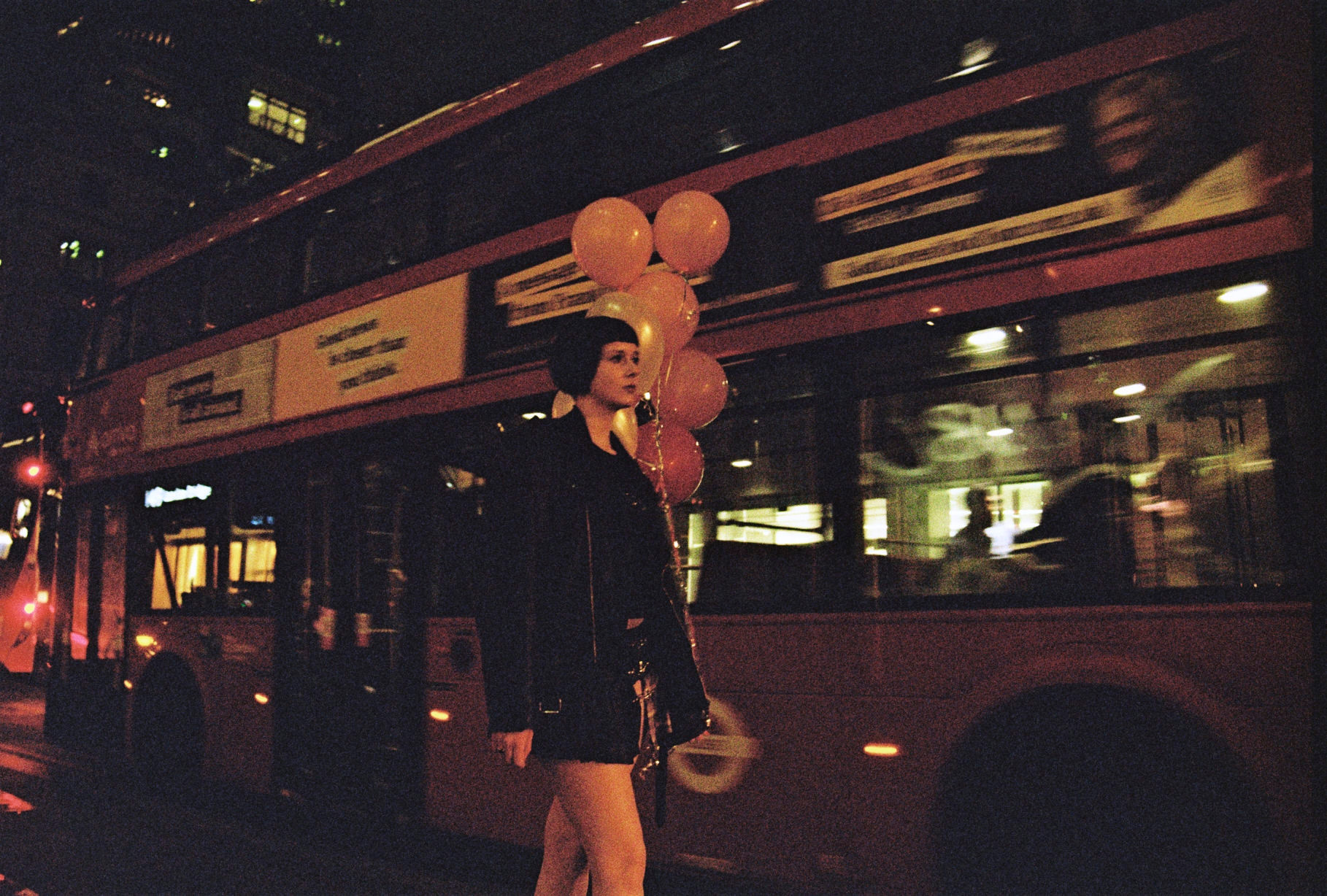
It’s another family gathering, and seven-year-old Grace Hamberger (aka Gretchin) is ready to perform her new, original song for her auntie for the first time. What’s the song about? Young love, of course. More specifically? Boys at school.
“I literally put a boy’s name in it, and I remember singing it to my auntie and taking it really seriously,” Gretchin laughs. “I was that annoying kid at family gatherings and at school, being like, ‘I’m going to sing you a song I’ve written.’
“I wrote my first song when I was about six and performed it at primary school. It’s just always been something that I did without thinking about it, as a way to understand how I’m feeling and communicate.”
If that didn’t make it clear enough, music has always been in Gretchin’s genes. From being introduced to The Beatles at a young age by her dad to going to her first gig aged six, music has always been a big part of the family.
“My mum loves country music and my dad loves Bob Dylan and The Beatles, so it was always a part of our house. There was always music playing, people around, and people swapping CDs. My dad would always burn discs for people and give them out.
“I was obsessed with The Beatles and would just watch all their films and listen to only their music at that age. I think because their songwriting is so iconic and full of storytelling, I would make up words and think, ‘Well, they made up words,’ like Ob-La-Di, Ob-La-Da isn’t a real word. I also loved Jeff Buckley and Bob Dylan, so a lot of heavy songwriting for a kid.”
Yet, despite her mature music taste, like most girls in the noughties, Gretchin was also a pop girl at heart, forever loving Girls Aloud and Miley Cyrus. It’s in this unique childhood combination that we find the origins of Gretchin’s golden formula for her spirited pop melodies and candid, story-driven lyrics, which have allowed her to explore some of her most personally challenging subjects through song.
Discussing her single Petals, in which she reflects on her experiences as a queer person, Gretchin said: “I think I felt my bisexuality was easy to suppress because you’re like, ‘Well, I like boys.’ And then, when the lockdown happened, I had all this time to sort of think about what I wanted and who I was. And what I’d maybe been pushing to the back of my mind.
“I started reconnecting with old friends who are queer, talking to people online, and dating when the lockdown lifted. I just felt like this completely different person. It sort of made me realise how much I’d been bottling up and how unhealthy that was for me.
Petals just felt like me sort of exhaling and being like, ‘I can be honest about who I am.’ That song just sort of poured out of me and felt really freeing.”
Having had such creative experiences, it’s easy to see how Gretchin’s nostalgic pop tunes have become a source of therapy for her. As blunt and honest as they are, while still providing comfort for all those who are similarly struggling with the daydreams, loneliness, and mental Olympics of being in your twenties, Gretchin’s songwriting is confidently upfront—even if it didn’t necessarily start that way.
“I don’t think when I’m writing that I think anyone’s going to hear it. I don’t think about that part until it’s almost the end and I’m like, ‘People I know might actually hear this.’
“But I think because I’ve always written songs and it’s always been a way for me to communicate with myself about how I’m feeling, it’s kind of like journaling for me. I don’t really journal, but if something bad happens, I write a song. If there’s something I don’t understand about how I’m feeling, I write a song. So, it is literally for me, and I don’t think about if I’m going to put it out or if anyone’s going to hear it.”
But even a musical project as intimate, honest, and soul-baring as this one still needs collaboration and remains very much a family affair. Recording most of her music in a small shed at the bottom of her family’s garden, Gretchin writes and records all her songs with her similarly music-obsessed brother.
“We only started doing it in lockdown. Before that, I’d been writing and producing with other people, and we were just like, ‘Why have we never done this together?’ It’s easy, you know. He’s my brother, we get along so well. He’s my friend and there’s just no filter between us. Like if I do something, he’ll say, ‘You can do that much better.’ It’s pushed me in different ways without me getting my back up. It’s kind of stripped away the ego from it, and it’s made the music better for that.”


Leave a Reply