Words by Sofia Perica
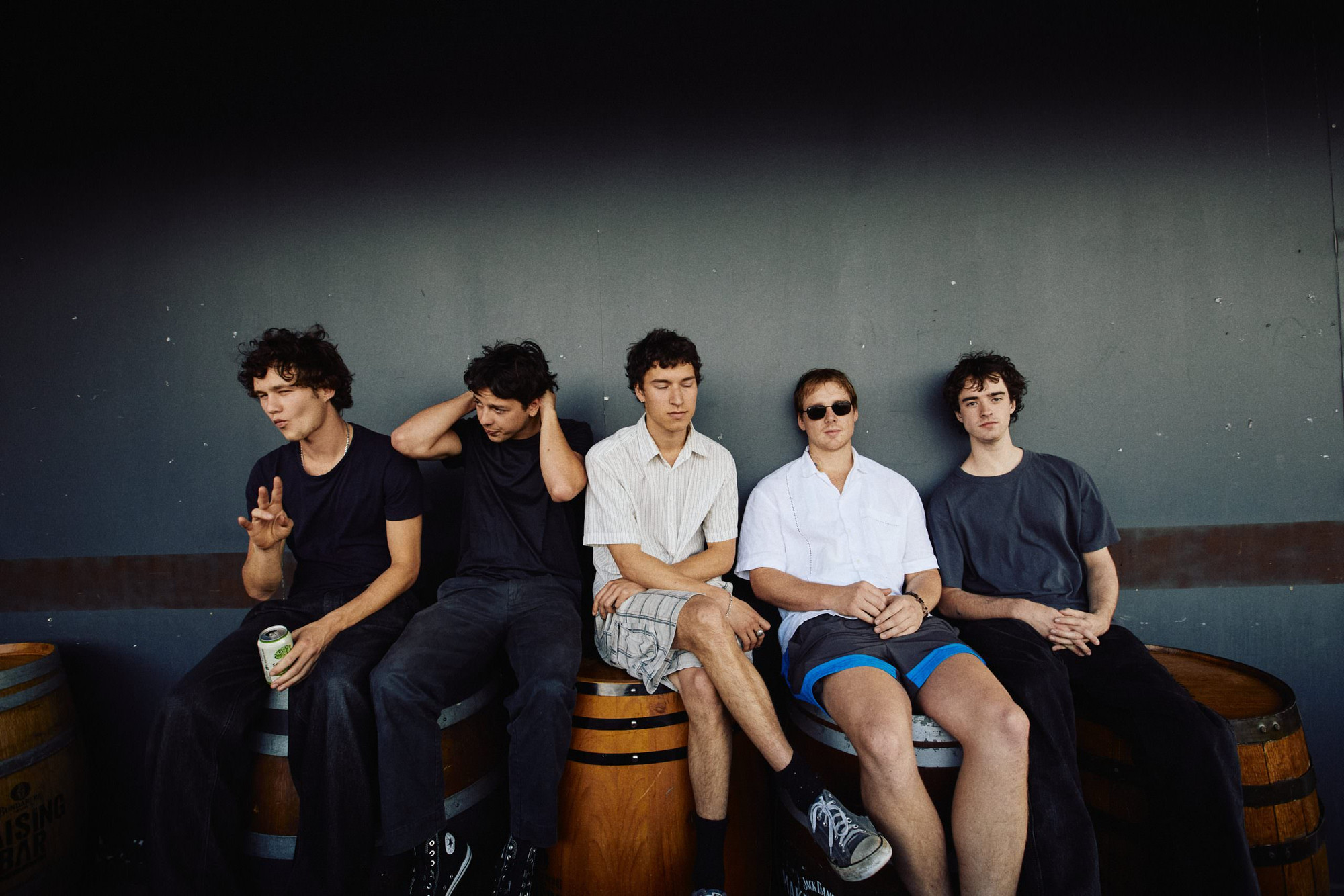
In conversation with Radio Free Alice, the band behind the EP Empty Words, they reflect on the lingering presence of the past in both art and everyday life.
Their reflections raise key questions: in what ways do we live in the past, and what role does art play in shaping or escaping it?
The band described the inspiration behind Chinese Restaurant as “the overwhelming sense of living in the past,” something they felt acutely while touring the UK. I asked whether they thought we are “oppressed by the past,” referencing Ernst Bloch’s idea of the “non-synchronous now,” where history continues to inhabit the present.
“Yes… though maybe haunted is a better word,” they replied.
That sense of haunting, they explained, isn’t just personal but cultural. “Britpop was the first mainstream genre that was explicitly retro. Before that, retro had always been niche. Since then, music, film, fashion, they’re all haunted by the past. Our whole generation has a kind of cultural cringe about the present moment.”
This idea of haunting led us to the work of cultural theorist Mark Fisher, who wrote about how culture increasingly repeats itself instead of breaking new ground.
“As the world becomes more neoliberal and money-focused, people take fewer risks. That’s the fault of late-stage capitalism,” they added.
Radio Free Alice is, in fact, a socialist band. Their name references Radio Free Europe, the Cold War–era broadcast network that transmitted uncensored news, culture, and Western ideas into Eastern Bloc countries where media was tightly controlled. The connection is both symbolic and referential, a nod to Cold War radio history and indie-rock heritage alike.
This theme of being “stuck in time” runs throughout Empty Words, most notably in Chinese Restaurant. Even Paris Is Gone reflects on the romanticism of a historic city bound by its own traditions, a city haunted, almost mourning what it used to represent.
But if the past is inescapable, how should audiences engage with it through art?
“The audience is entitled to their own engagement,” one member said. “Most artists wouldn’t claim there’s a single, specific meaning to understand. If listeners want to interpret a song based on their experiences, they can. If not, that’s fine too. It’s essential they listen for it to exist, but not essential they assign it meaning.”
They cited Sonic Youth as an influence, admiring their open-ended lyrics. “That ambiguity, that vagueness, it allows new meanings each time you listen. A lot of our lyrics are like that too. Some are specific, others hold multiple meanings.”
When I suggested that art might help us escape “the nightmares of the past,” they agreed, though cautiously. “Art is many things. It can be an outlet when language feels limited. It can make you feel less alone.”
Listening to their music often sparks that same sense of connection for me. I told them so, and they nodded, noting that process often matters more than meaning in their work. “I don’t think many artists enjoy explaining what their songs mean,” they said. “It’s easier, and sometimes more interesting, to talk about how they’re made.”
According to Noah, much of the lyrical process begins with fragments, lines saved in notes, scraps of ideas gathered from daily life, coffee-fuelled writing sessions, or observations while traveling. “Songs are compilations of those lines,” he explained. “You take one piece from here, another from there, and find a way to bring them together.”
The music, meanwhile, often grows out of jam sessions with the full band. “It might start with something we played last Friday, then shift into an idea from Tuesday, and suddenly we realise they work together.”
Whether it’s a childhood memory, a half-remembered lyric, or a retro sound that defined an era, the past lingers in their work, as something to acknowledge, wrestle with, and transform into something new. Haunted by memory, culture, and history itself, Radio Free Alice find originality not by escaping the past, but by creating with awareness of its weight.

Leave a Reply