Written by Mimi Cotton
Photos from Netflix
Guillermo del Toro’s Frankenstein has captured the spirit and heart of modern audiences and it’s not just because of Jacob Elordi’s star power. So what is it about this adaption of Mary Shelley’s 1818 novel that feels so tangible for audiences 207 years later?
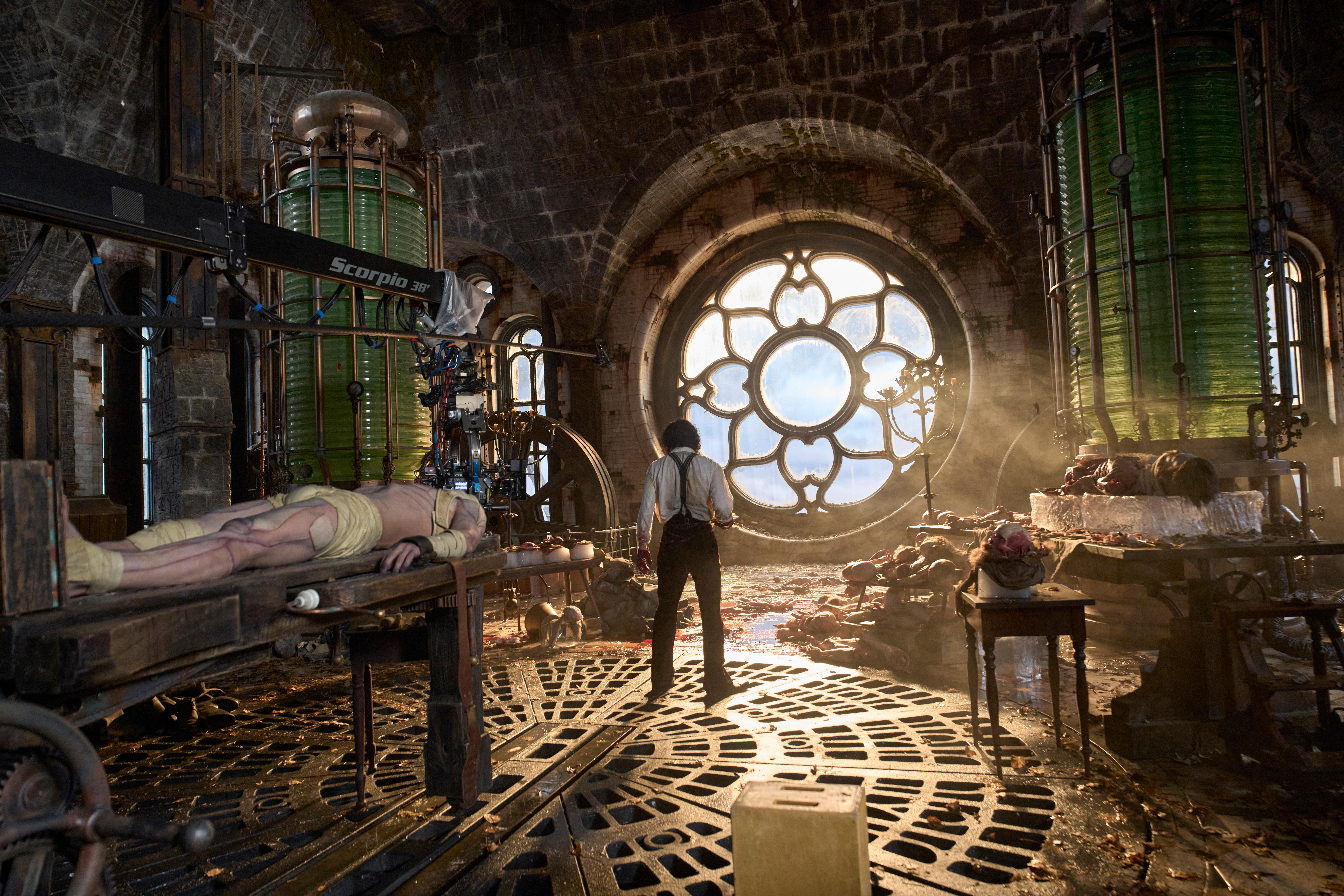
During the creation scene, Oscar Isaac’s Victor Frankenstein rushes around a lab surrounded by the bloody mess of bodies needed for his project. The scene is drenched in blood. It is a massacre of limbs, heads, muscles and bones strewn across the floor. However, Frankenstein pays this no mind, his creation is his focus. Who cares about the gory mess needed for the final product? Does that attitude sound familiar?
In recent years we have been witness to technological advancements with AI at the forefront. However, what was sold as a useful tool was sent out into the world seemingly with little regard for the negative effects that have spread beyond the realms of the internet and into real life. Think of AI being used for revenge porn, child abuse imagery and even cases of chat bots allegedly encouraging young people to take their own lives.
During an interview with NPR, Guillermo del Toro himself compared modern ‘tech bros’ arrogance to that of Victor Frankenstein. Just like Frankenstein, artificial intelligence pioneers seemed to have thought little of the consequences of their creations. AI tools were thrust out onto the general public, where yes they can be used for good, but can also be unmonitored, uncensored and abused. The public has to deal with the consequences when, as Mia Goth’s Elizabeth states, “ideas are pursued by fools.”
The creature in the film has a doomed state of permanence; he cannot die and once in the world he cannot be taken back. This directly mirrors conversations online on how AI’s impact as well as social media content is permanent. The good, the bad and the straight up horrifying parts of it. Just as the creature is made from pieces of others and stuck together, AI also regurgitates information taken from different sources. Artwork, voices, faces, words all stuck together in a tool that can supposedly make anything for anyone. Is it any wonder that this kind of power could be abused? Was this something that its creators could have predicted?
Perhaps, as Frankenstein says in the film, these tech pioneers had not “considered what would come after creation.” Excitement and naivety could blind people to the potential of tools being misused, or perhaps they could see the potential. Perhaps in the name of innovation they decided not to care. During a confrontation in the film Victor claims the creature “doesn’t know any better” in regard to his mistreatment. Elizabeth then points out that Victor, however, does know better. Is this the same kind of attitude and arrogance of tech pioneers that we can relate to?
These questions around AI, its purpose and its creators swirl around in society. Some embrace AI, using it as a search engine, an artist, a writer, a therapist or a friend. Others fear how AI takes away human creativity, interpersonal connection and the disturbing content it can be used to create. That’s not to even mention its environmental impact.
Shelley’s original novel was also written in a time of technological advancement, where revelations in medicine and the popularity of galvanism (the use of electricity that seemed to ‘reanimate’ the deceased) raised questions about the line between life and death. These advancements came hand in hand with fear and anxiety. What would happen if this kind of technology was abused by the wrong people?
Jacob Elordi in ‘Frankenstein: The Anatomy Lesson’, a behind the scenes documentary on the film, says how the monster “turns a mirror back onto the world” which is exactly why the film has been so successful. It echoes our fears and concerns for the modern era. The hubris of Frankenstein resonates when we are seeing this behaviour mirrored in modern ‘tech bros’. Shelley’s novel reflected the fears around the misuse of technological power, and through Del Toro’s adaptation, audiences can relate to the messaging of Shelley now more than ever.



Leave a Reply