
Written by Alivia Stonier
Cover photo by Florence Sullivan
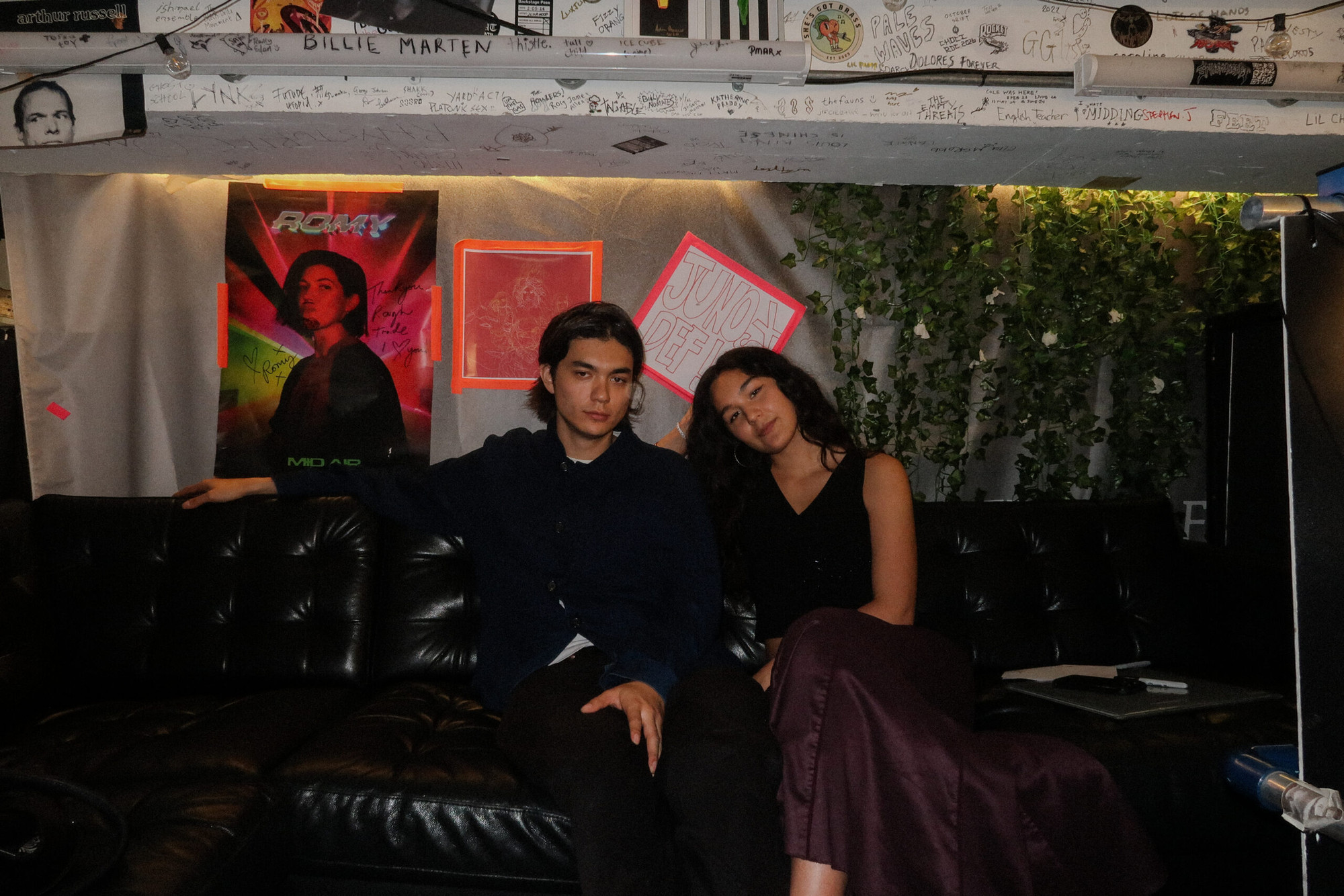
Images via Sarah Kinsley and 1824
There’s a rare intimacy in Sarah Kinsley’s music. Each note and lyric feels like it has been plucked directly from her own experiences. With her new EP Fleeting, released on February 13, 2026, Kinsley invites listeners into a world that is at once expansive and intensely personal with songs born in the back of New York City cabs, out of late-night euphoria, and moments of quiet reflection.
A classically trained pianist with an experimental streak, Kinsley blends lush production, intricate vocal layering, and cinematic sensibilities to craft music that lingers long after the final note. Fleeting is about impermanence, desire, and the small, yet profound, ways time shapes our emotions, offering a sonic space where listeners can feel deeply and fully.Ahead of her EP release and upcoming tour, we sat down with 1824 and Kinsley to talk about the creative process, her collaborations, and the emotional threads that weave through her music, revealing the heart behind the sound.
To first understand how Bleeding took shape, the artist listed personal influences that creatively led her: “During the production phase of this EP, I was listening to Hats by The Blue Nile a lot. When you listen to music so much, there’s definitely a part of it that seeps into your subconscious in some way, and that was definitely happening for me. They have a song called ‘Let’s Go Out Dancing Tonight’, and that was in my subconscious for a long time.” Kinsley also cites New Order and Blood Orange as having an impact on her latest work.
But those weren’t the only influences. Kinsley also mentions a book titled The Right to Sex, which she describes as “a kind of history of twenty-first-century feminism and relationships, and it made me feel emboldened in a certain way after reading it. That definitely inspired me.”
Outside of a deep love for other artists and art mediums helping to expand her catalogue, Kinsley explained how her classical background interacts with natural influences and intuition. “I think if you’ve ever had any kind of music training, it becomes like this real wolf inside you that you’re fighting, at least that’s how it feels for me most of the time,” she continues, “It’s like a counter-voice in my head. Sometimes that voice is really interesting and helpful, and sometimes it’s just noise.” All of this combined allowed for a multimedia whirlwind of influences.
It was noted during conversation that “Fleeting” has an almost visual, filmic quality to it. Films have acted as another source of inspiration for Kinsley. She says “I’ve always been happy for my music to be described as cinematic pop. The first bridge between my classical background and becoming more of an alternative or pop artist was actually film score. That felt like the most modern, applicable evolution of classical music. It sounds cheesy, but making music that scores your life has always been a dream of mine.”
She continues, saying, “With this EP, I’ve been digging deeper into texture and building out the sonic world of a song. I’m definitely a maximalist producer. I love filling a track with layers, but now it’s really important for me to be intentional about why something is there.”

Not only did this project allow for an evolution of sound but growth that allowed for healing: “This EP feels like the most vulnerable I’ve ever been. I’ve always been vulnerable in my music, but this is a newer level of honesty, just saying what I want to say point blank. When I was younger and first starting to write, I leaned heavily into ambiguity. It felt powerful because it allowed me to hide…This year, I went through a lot of changes. I felt stuck for a while, and I realized that saying something exactly as it is, being completely honest about what I feel, what I want, what I desire, is actually much more freeing and much more powerful… might be harder to heal through conversation but feel easier to express in songwriting. That change has been monumental for me.”
Along with this vulnerability is a physical space for fans to be themselves as Kinsley provides a dreamy and atmospheric performance when taking to the stage: “It might sound abstract, but it feels almost spiritual. Like we’re transcending these separate pockets of time just to exist in that shared moment. And through that, I actually understand my own music better. It’s a very beautiful experience.”
Kinsley reveals that ‘Lonely Touch’ is her favourite song from the EP and also the first she wrote for the project. She says “I love quiet music, ambient, folk, but I also love noise. I love being drowned out by sound. The outro of “Lonely Touch” is filled with so many instruments and full-volume textures. It felt like an amazing sonic representation of what I was feeling in the song, this unrelenting desire, this yearning you can’t separate yourself from.”
When it comes to production, Kinsley is known for using a contact microphone to expand her vocal world. She reveals that the contact mic was introduced to her by a professor that taught her Sound Design. She says, “The sound was very different from a traditional microphone. I became fascinated and started researching them more. I learned about how they were used in experimental contexts, even how David Attenborough once used them to mic a tree so you could hear insects moving inside and what felt like the heartbeat of nature… I ended up making some myself and experimenting with placing them against my neck, stomach, or mouth, running them through chains of effects. I created this almost whale-like synth sound with my voice, and it opened a very experimental door in my music-making. I don’t use it much on this EP, maybe once or twice on a ballad that isn’t out yet, but I still love it.”
With the discussion of particular tracks like ‘Lonely Touch,’ I wondered about the duet ‘After All’ with Paris Paloma. When asked how that experience shaped the emotional narrative of the song, and what she learned through her first collaboration, the singer smiled. “It’s funny, Paris and I actually still haven’t met. So there wasn’t a huge amount of direct vulnerability in that sense. She sent files over, and I thought they were great The vulnerability was more about inviting someone into my world of song for the first time. As a self-proclaimed perfectionist, that was a little difficult. But I was really happy with how it turned out.”
Fleeting was not only created across the Atlantic but was written in the back of cabs zipping across New York City. The artist said that this environment had “completely.” shaped the mood and themes of the songs. “Living in a city is such a privilege, being surrounded by so many people, constantly inundated with newness. The visual world of this EP is very much city lights, silhouettes, evenings. That came directly from my experience of coming home late after something moving… I came home as the sun was rising. The sky was this beautiful color. The noise from where I’d been was still ringing in my ears. You feel sweaty, a little gross, but completely alive. That feeling, of newness, aliveness, catharsis, is something I associate with living in the city. Growing up in the suburbs, there was nothing quite like that. That energy definitely seeped into the EP.’’
When asked about the relationship between her past and current self when sitting down at the piano to create the artist admitted, “I think this is probably a universal experience, especially among artists. You spend so much time trying to unlearn, unlearning theory, unlearning what you’re supposed to do when you write a song. You try to strip everything away to return to that root of being a child and having childlike wonder.”

“A friend of mine was recently talking about how, when you’re a child, your brain is so fresh that everything triggers a response. As you get older, you gain logic and understanding. You don’t get shocked by small things anymore. That’s necessary for growth, but it also means it takes so much more to feel that spark. As I get older, I feel like I’m crawling back toward that state, trying to be excited by every musical idea, even if I don’t think it’s the best one. That childlike potency is what I’m trying to preserve when I sit at the piano.”
When talking about what she hopes listeners take away from this new project direction, the artist says, “This EP, in particular, is about impermanence. It’s about understanding that you can still feel euphoria or catharsis even when you know something won’t last. I hope listeners feel a tinge of that. But ultimately, it’s entirely individual. I don’t feel I have the right to tell people what to feel.”
Speaking about her relationship with producer Jake Arons, Kinsley says, “He really understands my brain and how I like to work. There’s always a stage in production where everything sounds terrible for a few days. Then suddenly it begins to take shape and feel magical. Hearing something go from raw and messy to alluring and cohesive, that transformation is the whole point for me.”
Given the transformation the artist has undergone, she spoke about personal and creative boundaries surrounding the transition into this new era: “I’ve been lucky, the people I’ve met through my music have been very kind. I haven’t felt a strong need to draw hard boundaries. What feels more complex is deciding how much of yourself to share online. There’s ongoing discourse about how artists should use their platforms and what responsibilities they carry. It’s a difficult balance because much of real life, what I believe, the causes I care about, the work I do, happens offline. You do have a responsibility when people look to you, but it’s nuanced.”
Despite so much change, time remains an undeniable thread throughout Kinsley’s work: “The through line in all of my music up to today is my ever-growing fear of time passing, and of death and loss. It permeates everything I write about… On The Fall, I was already writing about time passing. With The King, I wanted to accomplish something or pay homage to my life before turning twenty. Cyprus was about hiding, retreating and trying to save literal time. Ascension felt like a precursor to escape, creating a magical place to transcend to. Escaper was about opening a portal to another place. And this upcoming EP continues that conversation…It’s about time, my manifestation of it, trying to run away from it, or trying to collect more of it. I don’t know if that theme will ever not be part of my music, honestly. But that’s definitely the through line.”
When asked about how music shaped her childhood and friendships, especially being in the orchestral and classical scene, the artist spoke candidly, “If you were in band or orchestra, there was this strange duality. You could feel embarrassed about what you did, but also incredibly proud to be part of something meaningful… Orchestra gave me a community that understood the trauma of learning an instrument, the discipline, the pressure, the effort. Later in life, I’ve realized the best friendships are the ones where you share that kind of unspoken language. You don’t have to overexplain your past or your experiences. My closest friends and I do very different things now, but we come from similar backgrounds. ”
To round out the conversation about what message the EP carries, when Kinsley was asked If Fleeting could send a message to Escaper, what would it say? “There are a lot of mantras in this EP about transience and time passing. One underlying message is: let the future reveal itself to you; let people reveal themselves to you. I think this EP would tell my first album that it’s okay to want to escape into different realms, to want to be somewhere else. But it would also say to allow the future to unfold on its own terms. That’s probably the message.”

With Fleeting, Sarah Kinsley creates an immersive emotional landscape where time, desire, and vulnerability meet. Through intimate studio moments, her music captures both the intensity of the present and the echoes of memory. Kinsley reminds listeners that music is not just to be heard but to be felt, turning every fleeting moment into something unforgettable, and you can listen in and join the journey of this EP now.
Leave a Reply