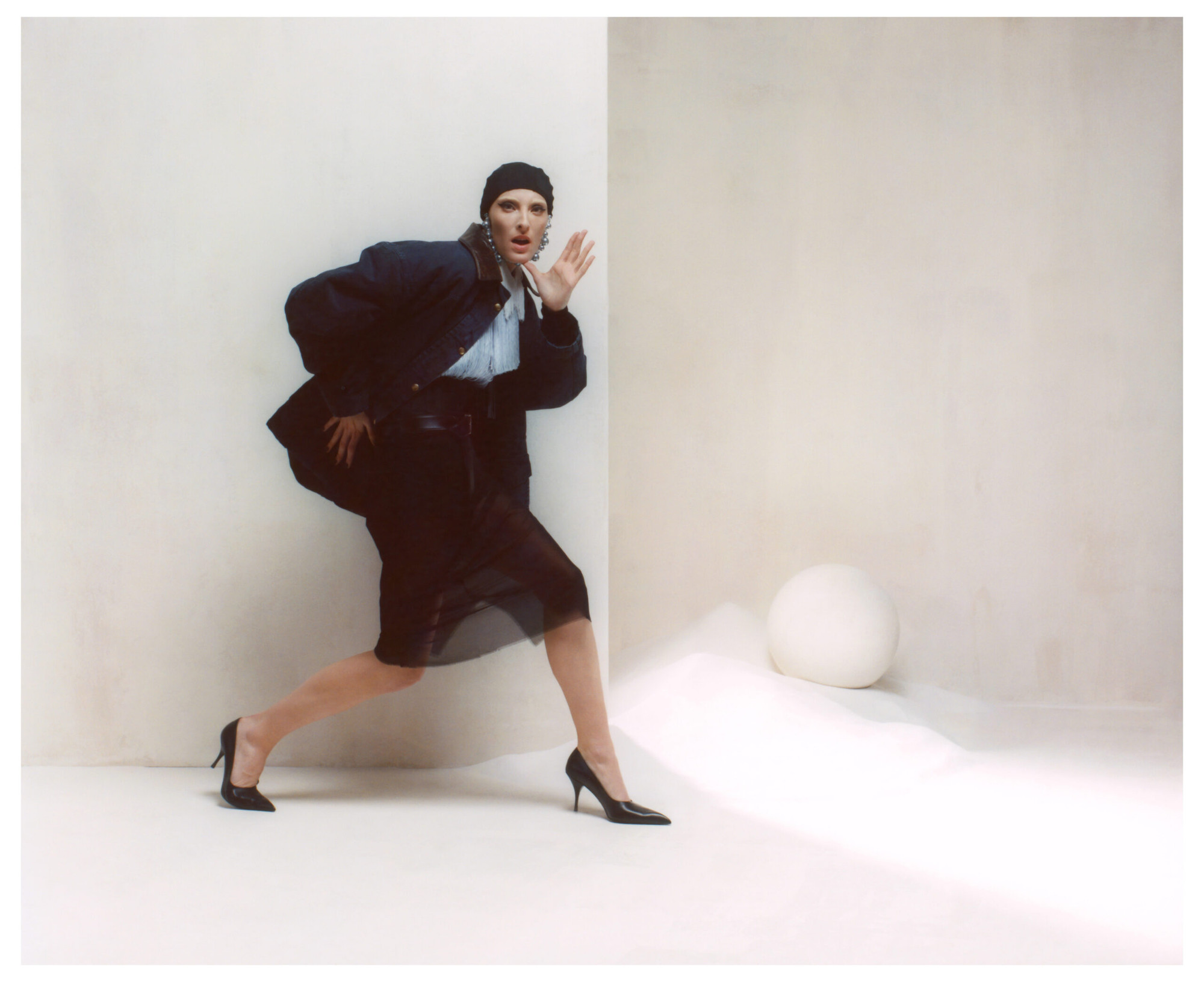
Interview by Uchechi Adeboye, Original Works by Tom J Johnson
Karma! Magazine had the opportunity to speak with Tom J Johnson, whose photography is deeply connected to nature and storytelling. With a style that blends softness and a focus on his subjects, Tom has quickly made a name for himself since graduating from Falmouth University. His work balances fashion and portraiture, often with a touch of nostalgia, and he’s already worked with a variety of brands and creatives. Tom’s unique approach invites viewers to experience the calm and thoughtfulness behind each image.We sat down with Tom to discuss his artistic journey, his creative process, and what inspires him behind the camera.

Can you tell us a bit about yourself and how your love for photography first sparked?
I grew up in the countryside of Somerset in the southwest of England, with not a whole lot to do around where I grew up. I feel like my imagination and the arts were a very important outlet for me during most of my younger years. My interest in photography really took off while studying for my art GCSE, where we had a module that required us to take reference photos for a painting. I found creating the reference photo much more interesting than any of the paintings I made. I set up an Instagram during the days of photography feature accounts and a chronological feed, and joined a community of like-minded creatives. I then pursued photography into my A-levels and later into a fashion photography degree at university, where I began to develop and hone my technical skills in studio photography.
When did you realize you wanted to specialize in editorial portraits?
I think it was around the start of my second year at university when I began to realize that editorial photography was a really exciting genre I wanted to explore. I wouldn’t say my interest lies solely in fashion photography. I love the art of fashion, but I’m more interested in the subject or talent of the image—this is usually entertainers or performers—and then using fashion and editorial styles to build a narrative around them.
Your work has a dreamy, hazy feel that really stands out. Did it take you long to develop this style, and what draws you to it?
I feel like my ‘style’ has been through many changes since I first picked up a camera in my mid-teens. When I first started, I shot only with my digital camera and did heavy editing to my images, playing with themes of surrealism and exploring more concept-heavy photography. During my degree, this evolved into a more fashion-oriented style, still with playful color grading but fewer surreal elements. After graduating in 2020, I began to explore film photography. I’d always admired the softness and depth I saw in magazines that I could never quite achieve with my digital images. I learned to color handprint at Negative Thinking, a darkroom in Bristol, and have been producing images this way ever since. I owe that style to the nature of handprinting and my process in the darkroom, particularly using a vintage lens that creates a slight haze due to decades of cleaning solution—it has a really beautiful softness to it.


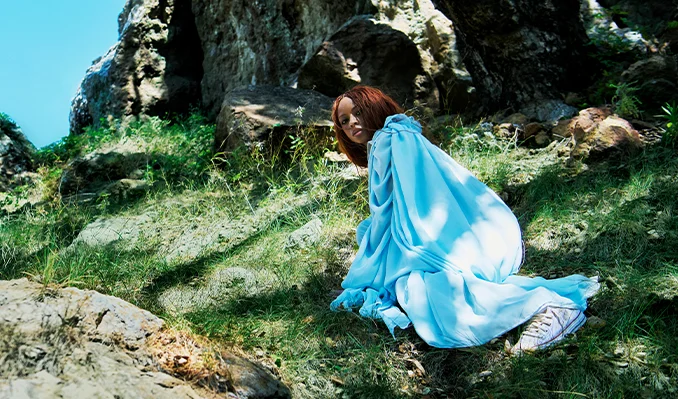
Nature plays a big role in your photography, like the shoot you did with Hamish Powell. What inspires you about nature, and why do you like to integrate it into your work?
Nature was a huge part of my childhood and teenage years due to where I grew up. I was always surrounded by it in some way, and I think that naturally influenced my images. I also really enjoy the romanticism of nature in literary works like Beatrix Potter or Wind in the Willows. There’s a cozy nostalgia in it for me that I like to return to every so often.
Another element I love in your work is the movement—the way your models contort and express themselves. How do you approach directing movement during a shoot?
All the movement in my images comes from my past in performing arts, which I did throughout my time at school. This also influences my interest in shooting performers and entertainers as my primary subjects. When directing movement, I’m primarily thinking about shape, silhouette, and how the light interacts with the body—where the highlights fall and where the shadows lie. Certain clothing lends itself beautifully to specific shapes, and a large part of my direction is exploring different options until one works harmoniously with all these elements. It’s about finding one main shape, then making minute adjustments, all in a way that feels natural for the subject.

You often work with medium format. When did you first start working with medium format, and do you have any advice for experimenting with it?
I dabbled in medium format during my last year of university, but only really started properly developing my skills in the medium after graduating. I began by scanning my negatives and later learning to handprint them after growing dissatisfied with the digital feel and over-sharpness of the scanned images. My advice for working with medium format is to learn it thoroughly, as intended in traditional darkroom practice. Don’t try to cut corners by only scanning your negatives as a beginner—if you want to get the most out of medium format film, learn traditional printing techniques and try experimental approaches. It’s a nuanced medium with so many possibilities. When investing in medium format, it’s worth going the whole nine yards to find what works for you.
Do other art forms like film or theater inspire your photography?
100%! I’m regularly inspired by performing arts, especially ballet and theater. I love the movement, the theatricality of the light, and the grand sets. I also love music for the way it establishes mood. I always listen to music when building up a creative for a shoot—it helps me influence the mood of the visuals and aligns my mind with the right vision. Classical art, particularly Romanticism in the 19th century, is another big influence. I love experimenting with lighting and coming up with set ideas, and often sample features from Romanticist artwork, like their use of lighting, set, composition, and pose to establish mood.
You’ve worked with some big names, many of whom may not be used to modeling. How do you bring out their confidence and ease in front of the camera?
I always try to make it a conversation with the talent. I offer them direction, but only if they’d like it. Some have a specific idea of how they like to be represented, and that’s always a discussion between you and them to find something that feels fresh while still honoring their image. Others are really open to experimenting with more dynamic posing and direction but just need guidance on achieving it. Introduce yourself, talk them through what you’re doing on set, and engage in lighthearted chit-chat to build rapport. Someone who’s relaxed and comfortable will be far more willing to take risks in front of the camera, and it’ll come across more believably.

Do you have any advice for photographers looking to break into editorial work and collaborate with magazines?
Think outside of typical editorial shooting when looking for early collaboration opportunities with magazines. There are many photographers aiming to do editorials, so finding a way to sidestep the crowd and grab attention is your best in. Offer to cover a couple of fashion week shows for a magazine for free to get the magazine credit, then build up rapport from there. Be open to collaboration with a wide range of creatives. Building a creative network is integral, and many opportunities will come from recommendations and word of mouth.
What are some dream magazines or projects you’d love to work on in the future?
A dream for me is just larger productions, grander sets, improving my lighting setups, and expanding my vision. I wouldn’t say there’s one specific magazine or project I’d love to do—I really enjoy the variety you get from the nature of the job. Each shoot feels different and is always an opportunity to try new techniques, work with different people, and create unique images. Most of the magazines I’ve worked with have a different approach, which keeps things exciting.
Make sure to check out more of Tom’s work on his Instagram and his portfolio.
Leave a Reply