
Written By Alivia Stonier
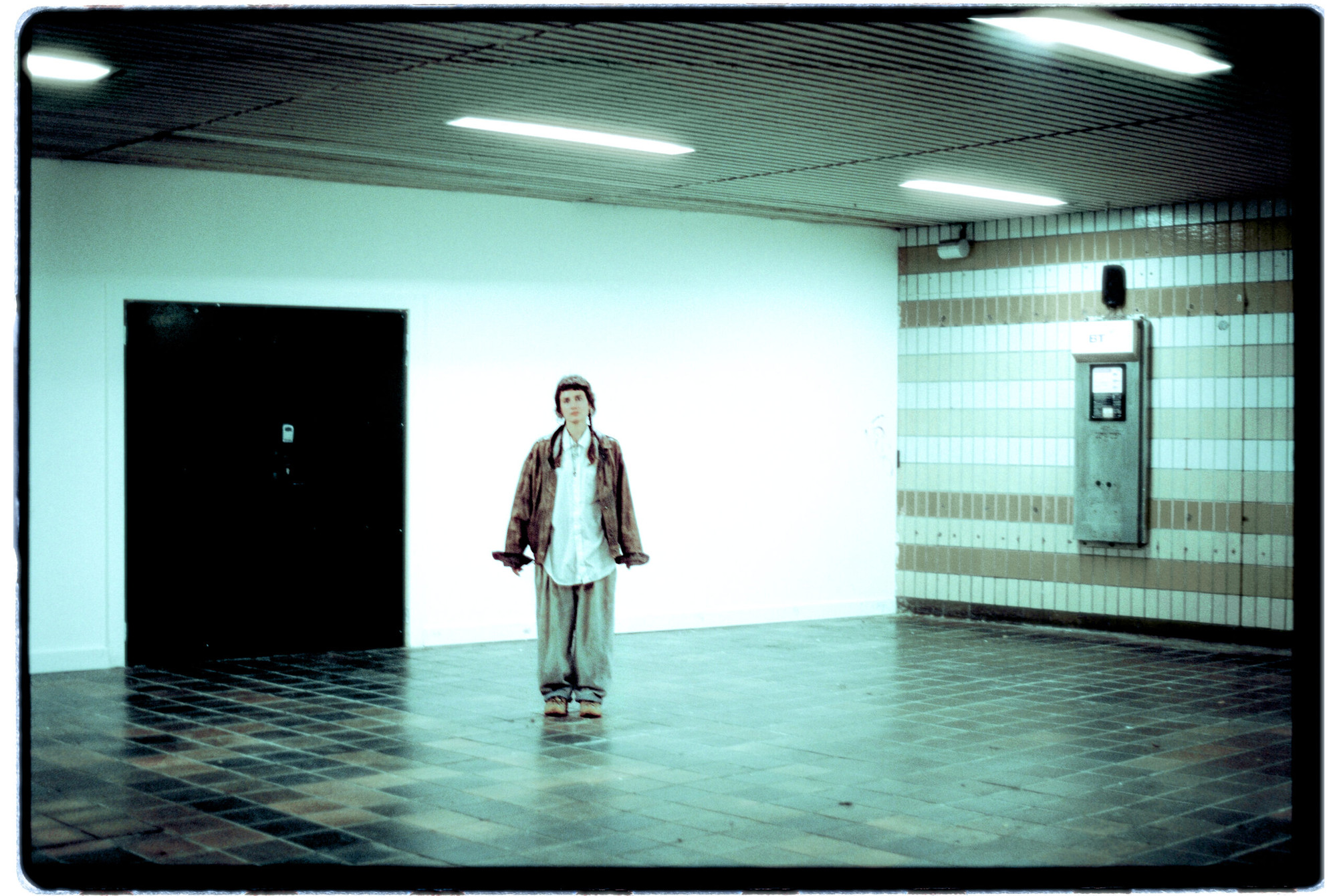
Photo (above) by Geoffrey Scott
Artist and DJ Kat Duma’s latest record release explores the blurred space between sleeping and waking. Unafraid of what may be non-linear storytelling or confusing narratives, the artist moves through questions that are posed in the striking of night and leave you by morning. Karma! got to sit down with Duma hot off the heels of the release of her track ‘Lullaby’, the album’s title track, which alludes to the very space the album seeks to exist within.
When talking about what inspired this deep exploration of the unconscious, the musician shared how naturally the process unfolded. “I don’t think I really came into it [knowing] this was the story … It was kind of done over a longer period of time and in a lot of different places. I was traveling a lot during that time too. So it was inspired by different things. But then when it came together and it really felt like one fixed final project, I was looking through the lyrics and listening to the music, and it really did kind of have this narrative tie. It wasn’t like the record is called ‘Lullaby’, which is the title of the song that just came out. But I didn’t even know that that’s what I was going to call it until I kind of listened to it all through.”


“It just really connected for me because I do feel like it is through this half-awake, half-asleep period of time where you’re not even sure what’s real and what’s not real. And I feel, for me at least, [that state] can be kind of spooky, because you’re unsure of your own reality. But at the same time, it can be really interesting to kind of explore your unconscious… It kind of links both the natural conscious – or the conscious world – and then the unconscious world in this way that I find really interesting. I felt like all the songs kind of developed through that. So then I just figured that a lullaby kind of guides you through that experience [which made for a] really fitting title.”
For Duma, nighttime holds particular significance for her and her art. She says, “I feel like a lot of my music is associated with nighttime, either lyrically or just sonically, but I feel like there’s kind of like an openness there; things can feel more symbolic or charged, I feel, at night…I’ll even notice sometimes, when I’m writing lyrics, something will be very plainspoken and then the next line will be more metaphoric and more symbolic in its wording. I don’t think I do any of that intentionally, but I feel like mostly I do things instinctively; the meaning kind of reveals itself to me later rather than trying to insert meaning into something that I’m doing.”
With such a natural experience of being comfortable existing within the in-between, Duma’s experience of resisting a fixed identity and being so open in her music creates an element of tension when it comes to understanding herself as an artist and the relationship that she carries with her work as a result.
“I definitely think that by allowing myself to not put that identity into one genre or one vibe it opens up some sense of freedom in terms of what I can explore and where I can go with certain songs. Some of them can take a darker route, and some of them can take a more poppy route or a more lighthearted route. And that’s why I don’t like assigning a fixed idea to what I’m doing before I start doing it. I think it’s harder in terms of industry stuff because people are like, okay, so what is it? And, what are you trying to do? What genre is it? How can we categorize this and where can we place it?” She adds “I feel like all of us as human beings, we’re not one thing… I feel like that has more staying power, allowing yourself to be fluid through these identities and through your experience.”

Within this fluidity comes a lot of improvisation and the allowance for ideas to come through naturally. When speaking to this creative decision, Duma opened up about some of the struggles that come along with the strengths:“It’s definitely always a struggle. I’m not going to say that it’s not, because it is hard sometimes when you are kind of improvising to know when something is good or not good. I do feel like I kind of rely on my friends sometimes for that too, and collaborators. A lot of these songs I did with my friend Alex, who was a really great sounding board for these… Every time I’ve had to go and rework a song a million times, it’s never been quite as good as the one that I did once in one sitting and was like, ‘I love it.’ So it’s kind of a delicate balance finding that. But I would say that through putting out my last album, that definitely gave me more confidence to know that I can do something and create a body of work that I’m happy with and like, and that I love and that has an arc that makes sense to me and feels true to myself and honest.”
Duma says she has difficulty being so vulnerable with collaborators as they are seeing the deepest parts of her process. “It was hard for me at first; I feel like I do so much of the work myself – the last album I produced. But it’s so interesting working with people because it can go so many different ways. But luckily, with this one, I just felt like everything came together in such an easy way, which is rare…I reached out to this guy Alex, who’s a producer, and the first thing I ever sent him, he sent me back a version of a song that changed 180, but it was exactly what I loved.”
“Even doing the album artwork and all the other artworks with this designer, Cedric. It just kind of clicked together, and things were just coming together in an easy way, which to me feels like I’m doing something right if it doesn’t feel like such a struggle to do it. I think I either got lucky or like things just aligned… I feel like with my first [album], it was probably harder because I wasn’t as clear in my own vision. So, I do think part of that is through experience; it gets easier. But yeah, things worked out. I’m so glad that you got to have a good experience with it.” The artist shared about collaborative work.

Despite the fruitful nature of collaboration, there is still a level of trust and fear that can come with opening up such personal work to others. “I guess that’s a tough one because I am a pretty private person I would say. I think that’s something that I like to think about a lot, but I guess … if you’re not being truthful in what you’re saying and what you’re doing, no one’s going to connect with it because people like to gravitate towards something real but I don’t know if I’ve necessarily cracked the code on how to perfectly balance it. I try to be as honest as I can while still keeping myself comfortable..”
It’s clear that so much love has been poured into the project and openness not only from the artist herself but from the collaborators that help to make it happen.
“I think a big thing that I like really exploring is duality and nuance. Keeping opposing truths and keeping an open mind to understanding certain nuances. And that, I think, ties to that lack of genre.”


“I would say that my favorite song on the album is the song ‘White Light’. That was really one of those things that I wrote it in like maybe the span of like thirty minutes. And then I had someone play a balalaika on it. I sent it out to this guy and he sent it back to me and I was like, this is so beautiful it just fits so perfectly. And then Alex came and he added some drums to it, and everything just flowed so naturally for that song. But that song is just like, I don’t know; I just really connect with it and the lyrics because they came together so quickly… And it’s been interesting seeing it resonate; someone was doing lighting for a show, and it’s the slowest song on the record, but he put the most intense strobes over that song. And I was like, that’s exactly it.”
“What I want is for this set to not feel like ‘these are the electronic songs’ and ‘these are the more guitar based acoustic songs.’ I want to figure out a way to bridge these worlds in a way where I can experiment with them live. I can loop certain sections, extend them, have them live on their own, and have it be more of one full experience rather than a set of songs. And that’s kind of like what I’m currently working on – really getting that right. So some of the songs that are slow or are a live drum set are now being kind of explored within electronic drums and seeing what of those I can play live. But then later on, the next step is I do want to get the full band involved again, because that was like the funniest thing ever when I was playing shows for my last album.”
Not only do the songs translate to the stage but they’re able to translate into the worlds of the audience and take on a life of their own within the mind of the listener. By being unafraid of this complexity, songs like ‘Lullaby’ also take this deeper, exploring the way in which projection bias affects our recollection of stories.
“I guess that’s one thing that I like; even with ‘Lullaby,’ the song explores projection, a kind of imagined feeling that you put on a different experience… You put sort of symbolism and meaning onto experiences that you could just be imagining. But, even if certain things are imagined, they’re still real to you because that still changes you. You learn something there. It’s an emotional experience that is genuine within that. Those are the kind of things that can impact you and change you and stick with you emotionally. I think that’s what I was saying in ‘Real Life’ too.”

In terms of what comes next for the singer as she continues to unravel this complexity, she opened up about how her musical world may expand moving forward. “There’s a few people that I want to collaborate with. I’d kind of like to explore different keys, like time signatures and explore different scales and this kind of thing. I have some more technical music ideas that I want to explore. But I have no idea thematically what it’s going to look like yet. I’m feeling very much like I’m still figuring out this record. I feel like it really teaches me about aspects of my own thinking and my own personality that I’m not consciously aware of, but then later I’ll be like, ‘oh, this is why I wrote this song, and this is what it was like trying to tell me.’ And then I’ll be like, ‘wow, that’s, that’s an interesting perspective I haven’t considered’, but I wrote it, it feels like it’s like teaching me about my own feelings in a way because through the music, I’m discovering myself more.”
We then dug into some fun questions that every Karma! interviewee answers, including what color Duma thinks her music or herself would be “I guess maybe it’s project-based. I feel like this album is really deep blues and silvery whites. I feel like it’s like living in that world versus the other one. For me, it was more green-ish, like a faded green. But I don’t know, I feel like that’s constantly shifting.”
And finally for a Karma! playlist recommendation she recommended her track ‘Mirrored Water’. Which will be accompanied with an animated music video worked on with Jeffrey Scott.

Leave a Reply