Written by Mimi Cotton
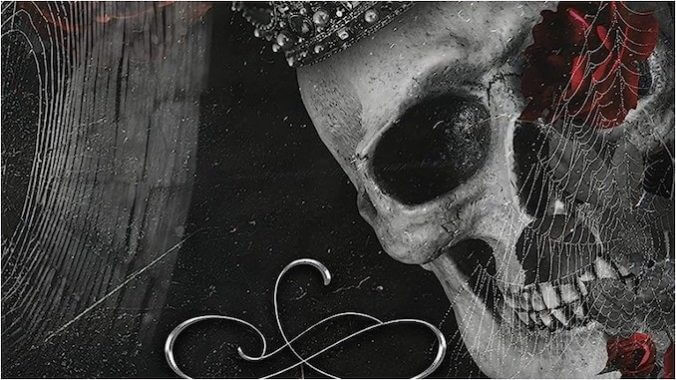
Romance has always been a popular genre, and one that is particularly enjoyed by women. But in recent reading trends, a romantic subgenre seems to be on the rise. The Dark Romance genre has massively grown in popularity, both in bookshops and online discussions. Yet, this rise in popularity and prominence hasn’t been without criticism.
Typical romance books are often light hearted, sometimes comical, whilst still using tension and emotional scenes that typically lead to a happy ending. However, dark romance uses much more intense emotional and sexual dynamics. Characters can be morally grey or sometimes decisively villainous. Within this subgenre, there is a wide spectrum of what makes the romance ‘dark’; from characters in toxic relationships or criminal settings, to clear depictions of sexual violence and abuse.
The discussion and criticism around this genre have become particularly prevalent after it was announced that dark romance book, Haunting Adeline, would be getting a film adaptation. In the book, the female protagonist is obsessively stalked by a man and it is between this pair that the ‘romance’ is depicted. The book includes scenes where the protagonist is assaulted and coerced into sexual contact. This appears to be a running theme within the genre, with violent, predatory men as the love interest. Often the male main character is portrayed as being misunderstood, protective or with a repressed trauma that is perhaps intended to defend or excuse his actions throughout the narrative, even if this includes physical and sexual violence.
Haunting Adeline, however, has been very popular, leaving many fans excited at the prospect of an on screen adaptation. Meanwhile, others have been horrified by the news, with many taking to social media to criticise the adaption, claiming that it further romanticses dangerous, abusive and misogynistic dynamics.
Haunting Adeline’s author, H.D Carlton, responded to the criticism via social media. In her response, Carlton defended readers of dark romance, saying that reading the genre is not “wrong” or “unhealthy”. She further went on to say, “you cannot champion for sexual assault and rape survivors, and in the same breath condemn them, invalidate them and shame them for how they cope and heal from their trauma”. Within the statement she refutes claims that the book encourages male violence against women, saying, “no one and nothing is to blame for a man harming a woman except the man.” She also raised the issue of censorship; something that is often in the news with book bans in schools and public libraries becoming increasingly common alongside the rise in conservative views around sex, race and identity. Carlton questioned the precedent that censoring her work would set within the broader literary world.
This isn’t the first time that a genre has come under fire; crime fiction has similarly been questioned for the prominence of male violence against women within its pages. In fact, as recently as July the Guardian found that 9 out of 10 of the best selling books in the UK featured the murder of a woman. This isn’t a new occurrence within the genre; murdered women have been prevalent in crime fiction since its beginnings. However, its commonality has led to people questioning if the genre normalises or even sensationalises femicide. In response, The Staunch prize aims to reward books where “no woman is beaten, stalked, sexually exploited, raped or murdered”. However, many crime writers felt resentment about the award placing them alongside “the pornographers of violence,” as writer Val McDermid claimed.
It is important to note that there is a key difference between portraying behaviours in fiction and condoning or promoting them. Crime writer Sophie Hannah wrote in the Guardian about how censoring violence could actually have an adverse effect. Hannah claims that, “if we can’t stop human beings from viciously harming one another, we need to be able to write stories in which that harm is subjected to psychological and moral scrutiny, and punished.” Within the crime genre this seems like clear justification; the narrative arc often ends with violence being punished and victims receiving justice. This is perhaps the key difference between depictions of violence within the crime and dark romance genres. In dark romance perpetrators are instead often rewarded, with the narrative ending with them ‘getting the girl’.
Ironically, the largest audience of crime fiction is comprised of female readers, much like the dark romance genre, with many believing this a way in which readers can process real world fears and anxieties. This is a similar vein of thinking as Carlton used to defend her book: by exploring these traumas, readers can process them. Reading dark romance that revolves around abusive or toxic relationships allows survivors a certain level of control; they can put the book down at any time and remove themselves from the fictional moment of violence. It’s understandable that this could be a way that readers process their own trauma if they have ever been in an abusive dynamic where control has been stripped from them. However, what about readers who read these books for pleasure? Could the control of being able to pick up and put down cruel behaving characters be misleading and lead to the romanticisation of situations that in reality are dangerous?
Another key element within the dark romance genre is its use of smut, or as many readers call it, ‘spice’. Within the last few years, there has been a concentrated effort to reduce easy access to violent or extreme pornography. The examples that this sort of adult content set included violence, a lack of consent and frequent misogyny. Many were concerned about young people recreating what they had seen unsafely and with a limited understanding of consent. Often this content went hand in hand with extreme misogyny online, much of which could be found on incel forums, where it was used to degrade and ‘punish’ women. Dark romance books often include scenes with similar traits as extreme pornography that can give harmful examples or expectations of intimacy, but are instead aimed towards young women. Yet, smut in books seems to have been left out of the conversation around the harmful effects of pornography.
However, these books are often aimed towards women, and this is perhaps why the ‘spicy’ side is discussed or questioned less. There is often a focus on female pleasure, something that traditional pornograpy typically ignores. Books like ‘Fifty Shades of Grey’ were some of the first popular fiction to explore women’s sexuality. The book was often jokingly referred to as “mommy porn” because of its main audience being older women, a demographic whose sexuality is typically repressed. It is worth remembering that the exploration of sexuality within these books is not always harmful. Interestingly, a 2024 study from Portland State University actually found that consent was discussed more in dark romance than in typical romance. Perhaps the issue is not the existence of these ‘spicy’ scenes but rather if they are framed in a safe and consensual way. When they aren’t, has the author intended to criticise the act of violence or is it played off as ‘sexy’?
It’s clear that the dark romance genre covers a huge spectrum and variety of ‘dark’ content. Some of these portrayals simply explore female sexuality without censorship or judgement. Meanwhile, others erotise sexual violence and justify characters’ abusive behaviours. The issues surrounding this genre seem clear cut on the surface regarding the potential harms of normalising, romanticising and sexualising its contents. However, the use of this genre to redirect and process trauma, as well as the concerns around censorship make the issue more complicated than perhaps originally thought. There is obviously a ‘line’ within the dark romance genre about what is controversial writing and what is clear sensationalism regarding sexual violence. It appears that the issue with the dark romance genre is that this ‘line’ only seems to become clear once it’s already been crossed.

Leave a Reply