
Words by Tee Tolmar
It is an autumnal day in Notting Hill, though the weather is surprisingly kind for London. Sitting across from GIOIA in a café – a cappuccino in front of her and a peppermint tea in front of me – we chat as people come and go around us. The door keeps opening and closing, conversations overlap, customers place their orders and cups clink against tables, while the coffee machine works away nearby. It’s a pleasant sort of noise, the kind that fills the space without demanding your attention.
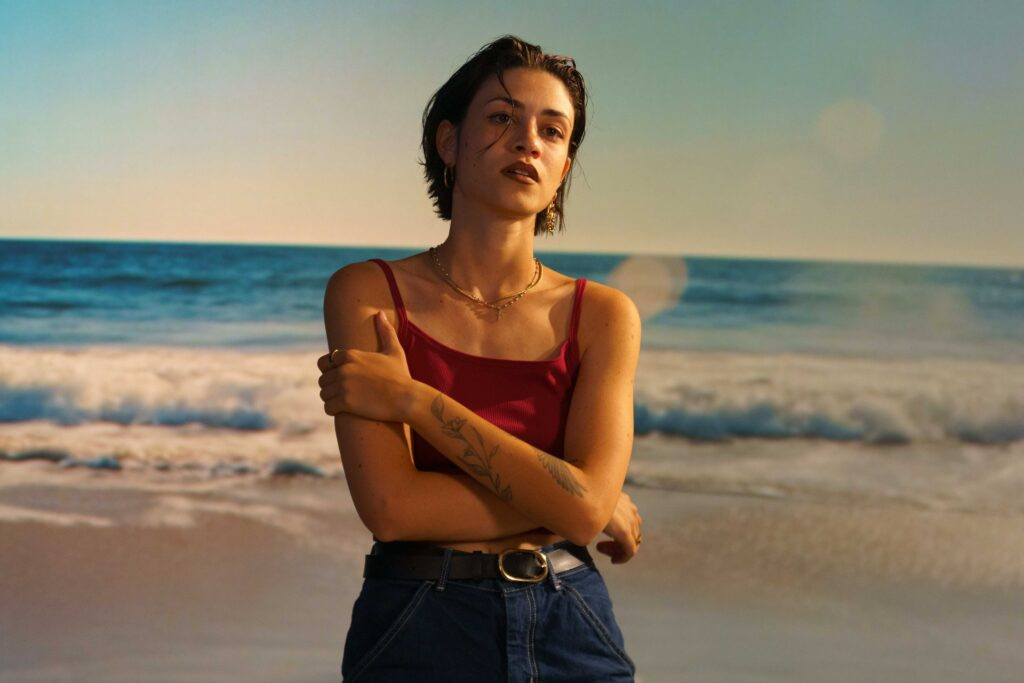
For GIOIA, music has always been about creating a world of her own. Her latest EP, AIM THE CAMERA AT THE SUN, feels like an invitation into one of those worlds: a collection of instrumental tracks that unfold like scenes from a film that exists only in her head. Drawing on the sounds of Italian cinema from 50 or 60 years ago, she builds something that feels both nostalgic and entirely personal, with each track opening up a new place, colour or feeling.
For GIOIA, the move towards instrumental music is less a departure from what she’s always done than a new way of approaching it. Having spent years making music in which her vocals played a central role, she’s now exploring how much she can express through the music itself. Although she’s always been involved in producing her own work, she admits she never quite saw herself as a producer in her own right. Self-taught, she often relied on the reassurance of others to recognise what she was capable of, until her team encouraged her to take the reins and turn her production work into a project of its own.
That encouragement came at a time when GIOIA was beginning to feel disconnected from the process of making music. After spending so much time producing on her laptop, she had started to miss the physical experience of playing instruments. She picked up her guitar again, having left it untouched for months – perhaps even years – and found herself rediscovering the pleasure of playing. Making music on a screen had started to feel “soulless almost”, she explains; but returning to instruments helped her reconnect with the music itself and with the joy of making it for its own sake.

That sense of rediscovery runs through AIM THE CAMERA AT THE SUN. Rather than approaching the EP as a collection of separate songs, GIOIA imagined it as a film, with each track marking a shift in setting or atmosphere. The journey begins in a jazz bar in Venice, before moving through different scenes and eventually arriving at a cinema. One track, ‘I Don’t Smoke, But I’ll Follow You Outside’, takes the listener somewhere sunnier, its title suggesting the kind of fleeting encounter that could change the direction of an entire evening.
This cinematic quality is not simply a matter of mood. GIOIA has drawn directly from old Italian film soundtracks, sampling music that was made decades before she was born and reworking it into something new. Yet the result is less an exercise in nostalgia than an act of imagination. She has seen only one of the films connected to the music she sampled, and, even then, the images on screen did not necessarily match the ones she had created in her mind. ‘Venice Gold’, for instance, had its own visual world for her and one that did not entirely correspond with the original film.
There is something fitting about that distance between the source material and the world GIOIA creates from it. The music might have begun in an existing film, but it becomes something else entirely in her hands. She is not trying to recreate scenes that already exist so much as opening the door to new ones, leaving listeners to decide what they see on the other side.
Inspiration, GIOIA tells me, can come from practically anywhere. Even the coffee machine making noise beside us could become a sample if she listened closely enough. Rather than searching for a particular sound or emotion, she has learnt to recognise the musical possibilities already surrounding her.
With influences spanning soul, R&B, hip-hop, rock and new wave, GIOIA has little interest in confining herself to a single genre. Instead, she lets those influences coexist, following her curiosity rather than trying to fit neatly into one category. The instrumental format gives her even more room to explore. Without lyrics to carry the story, she puts more of herself into the production, using texture, atmosphere and detail to express what words might otherwise convey. Her voice still finds its way into the music too, through layers of harmony that function almost like another instrument.
The absence of lyrics also leaves room for listeners to bring their own experiences to the music. GIOIA says she doesn’t have a particular listener in mind when she creates; she wants people to enjoy the music, relate to it or simply “get in the movie”. For an artist whose tracks begin with the images and feelings in her own head, that freedom seems fitting.
That willingness to follow an idea wherever it leads has carried GIOIA’s music far beyond her small hometown in Italy, reaching listeners in places including Japan and South Korea. Social media has played a significant part in that journey, even if GIOIA admits that the short videos she shares cannot fully convey the worlds she builds through an entire EP.
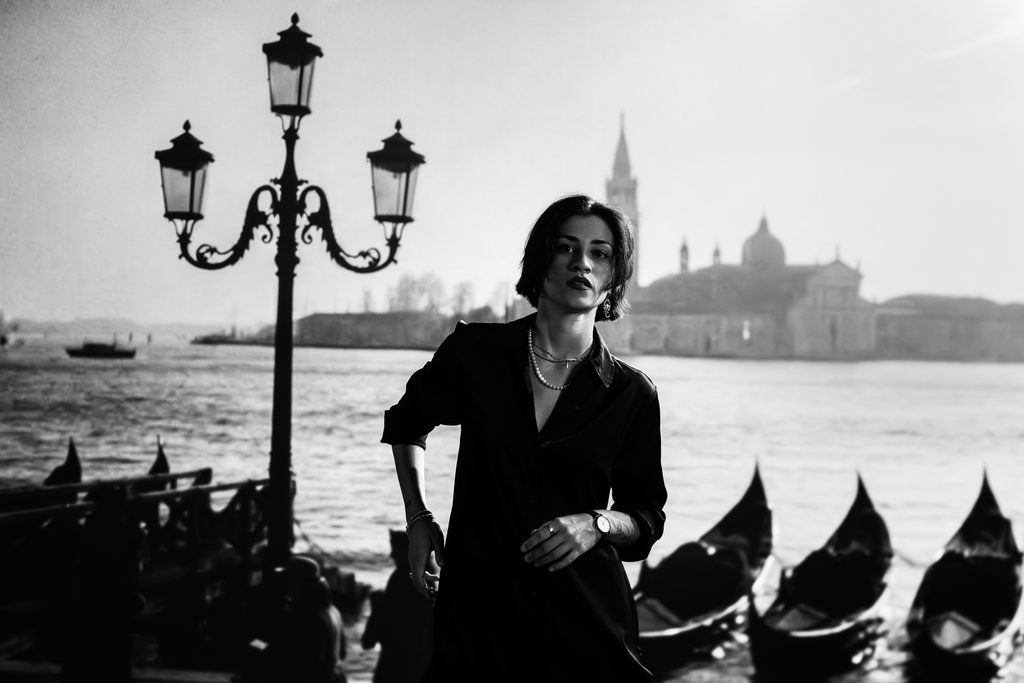
One video in particular changed her perspective on sharing her work. While sampling a track by Japanese artist, Minako Yoshida, GIOIA filmed the process despite being unhappy with the angle and lighting. The sample became her track ‘Cologne’; the video went viral and eventually reached Lenny Kravitz. The experience left her wondering why she should overthink things so much. As she puts it, you never know what might happen when you put something out into the world.
For all the attention that can come with a viral moment, GIOIA’s focus remains on making music and discovering what she is capable of. Her approach to music is guided by a willingness to follow an idea wherever it leads, whether that means sampling an old film soundtrack, returning to an instrument or building an entire imagined world around a sound. There is no need to settle on one identity or decide exactly what a piece of music is supposed to mean.
“Possibilities are endless,” she says. It is a simple sentiment, but one that feels central to AIM THE CAMERA AT THE SUN. The EP is not so much a collection of answers as an invitation to imagine: a series of scenes that might look different to every person who listens.

Leave a Reply