Words by Sofia Perica
In light of the release of their album, diúlfhiacla (baby teeth), we talk about their Gaelic roots, connecting with their non-binary identity, and shedding past versions of ourselves.
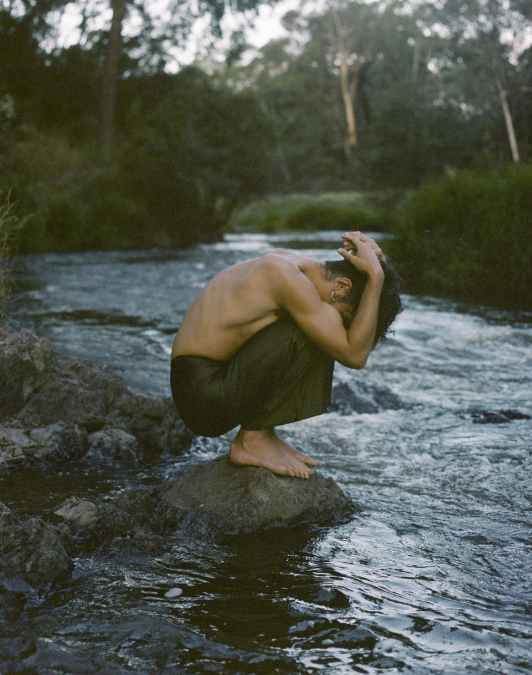
Across nine tracks, JoJo brings that tenderness into conversation with their Irish heritage, weaving the comfort of traditional sean-nós melodies and uilleann pipes through treated strings, tape loops and sampled synthesisers. Recorded spontaneously with a travelling analogue studio across the Irish Midlands and Inis Oírr, and Australia’s Dja Dja Wurrung Country and Blue Mountains, the record feels deeply connected to place whilst questioning what it means to belong to one.
The record is deeply embedded in Gaelic song, language, and sound, guided by Blakeney’s connection to Gaelic tradition.
“I feel like it’s an osmosis thing. I’ve been going to a lot of Gaelic song sessions. They do them here; someone just sits in a corner of the pub and just starts playing, and people just join in, and I think those melodies start to permeate through you.”
The record tries to explain the veins of an ancient culture that complicates a sense of place and belonging. For JoJo, place and identity are interlinked. They question how belonging exists without ownership, as a lot of their music is written on unceded Wurundjeri land.
“Irish people have been oppressed, and they’ve also oppressed. I felt a responsibility to find my sense of belonging outside of colonial Australia. I’m discovering that I’m actually connected to a culture that’s like 5000 years old. I thought I would explore that a little bit, to get a deep sense of belonging in the world.”
If you listen to the whole album, it almost sounds like a field recording – exposed yet intimate, raw and completely stripped back. Someone described their music as an “outdoor bedroom”, and I find that rings true – it makes the record that much more real and vulnerable. Blakeney’s music is rather atmospheric, almost like a sound installation but with deep lyricism.
“I love when you can hear a stool creak or someone giggle at the end of the take. I think if I tried to create something that was hyper-polished and perfect, it wouldn’t have been honest.”
In searching for their Gaelic identity, they explain this album as a stepping stone of self-discovery, growing older, and accepting that change is inevitable.
“The whole process of the record was the last shedding, stepping into a next level of maturity.”
They recall that in the final stages of the record’s production, one song got cut for exactly this reason. “There are nine tracks on the record, but there were 11 that were done, and one of the ones that got cut was a really old song that I realised I was clinging to. It was just the only one that’s from a different world: a younger self.”
On shedding past versions, they have come to be more unapologetic with their queerness, and realise how much gender binaries affected how they approached music in the past, as well as how much freedom there is in letting go of binaries in everyday life.
“I think identifying as non-binary opens up the fact that we don’t have to be absolutely anything. You don’t have to have an answer for everything. I think the coolest thing for me is feeling like you never need to justify your existence. For example, I don’t have to justify my existence as an Irish person; I can make something that honours that and honours the fact that I’m like a colonial settler here in Australia as well.”
But this record is described as expressing a “quiet desperation to inhabit a softer, kinder world.” In Baby Teeth, JoJo really wants people to listen carefully, to have permission to feel and really sit with their emotions.
They say that the thing they want most to take away from this album is to realise that “grief is an untapped human superpower…I would say I want them to feel that grief is safe.”
Though grief is such a scary thing, JoJo is unapologetically taking it in their stride, much like they do in their music.
diúlfhiacla (baby teeth) is out now digitally via Mothertongue Music and on limited-edition 12-inch vinyl.

Leave a Reply